Sustainability Isn’t Just Environmental: Why Social Impact Belongs in Your ESG Strategy

From CSR to Core Strategy: Aligning Corporate Values with Lasting Social Change Has building a business case been a challenge for your corporate social responsibility efforts?
Read it now
ESG without the “S” is just EG.
You’ve mastered carbon tracking. Your governance frameworks shine. But here’s what forward-thinking funders already suspect: companies are racing to perfect two-thirds of their ESG strategy while leaving the most human element underdeveloped.
The “S” in ESG remains frustratingly vague for most organizations. They measure emissions to the gram and document every diversity metric. Yet when it comes to social impact, they offer anecdotes about “community engagement” and “stakeholder value” without concrete metrics or measurable outcomes.
This oversight creates a credibility gap that threatens the entire ESG framework. Without strong social outcomes, ESG risks toppling over with only two legs of a three-legged stool.
The Foundation That Changes Everything
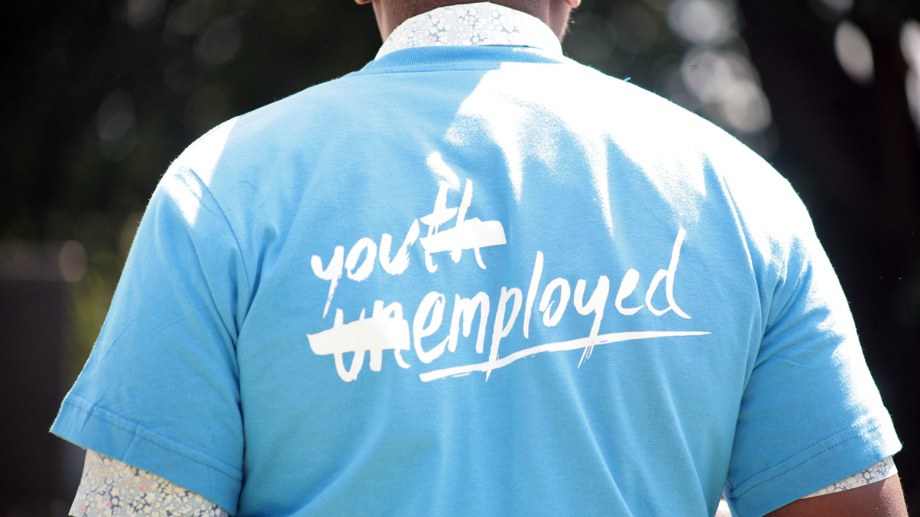
Smart corporate funders recognize that employment has a fundamental role in stabilizing individuals, families, and communities. Jobs aren’t just economic transactions. They’re the deepest form of sustainability.
When someone lands stable employment, the ripple effects transform entire ecosystems. Children stay in school longer. Healthcare costs drop. Crime rates fall. Tax bases strengthen. These aren’t feel-good stories. They’re measurable, lasting changes that reshape trajectories for generations.
The social dimension of sustainability is lived and felt in ways that complement environmental and governance metrics. It shows up in grocery stores, school pickup lines, and family dinner tables. It’s the human element that makes all three pillars work together.
Yet many ESG frameworks treat social impact like an afterthought. They measure what’s easy to count rather than what actually counts.
The Universal Language of Opportunity
Here’s why employment-focused social impact stands apart from other ESG initiatives: jobs speak a universal language.
Unlike politicized debates that divide stakeholders, workforce inclusion creates alignment across every constituency. Employers get reliable talent pipelines. Governments reduce systemic costs and strengthen tax bases. Workers gain dignity, income, and career progression. Communities become more stable and prosperous.
For funders like you, this universality translates into something precious: scalable, evidence-based impact that doesn’t require navigating cultural or political minefields.
Jobs empower across lines of race, religion, and creed. They’re the ultimate bridge-builders in an increasingly fragmented world. When you invest in employment-focused social impact, you’re not making a political statement. You’re making a universal economic investment that benefits everyone involved.
This is why corporate funders should consider shifting their social impact strategies toward workforce development. Employment creates the kind of measurable, lasting change that makes ESG reports compelling.
Related to this topic:
From CSR to Core Strategy: Aligning Corporate Values with Lasting Social Change
Your Blueprint for Measurable Social Impact
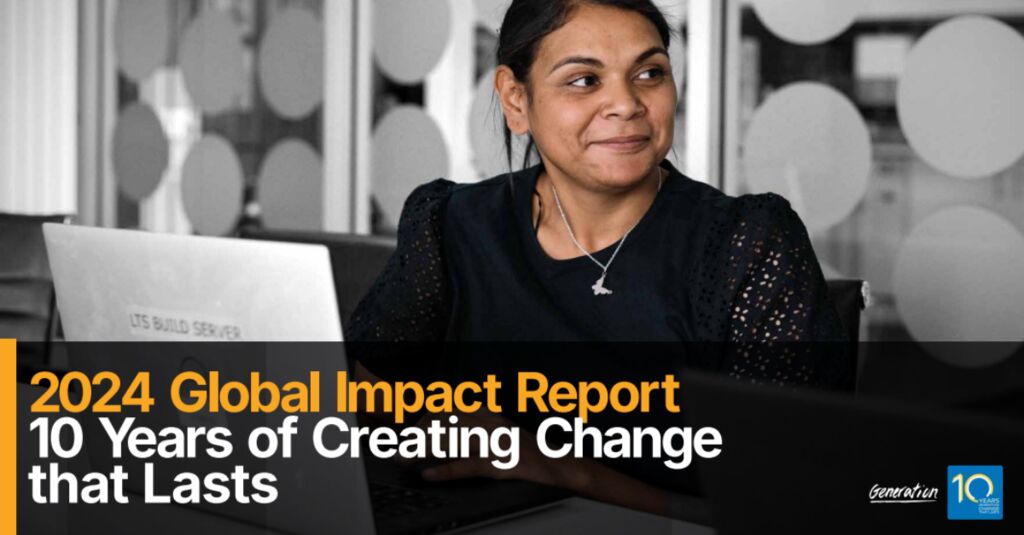
Generation has spent ten years proving that social impact doesn’t have to be vague or unmeasurable. We’ve built a global model that delivers concrete “S” outcomes at scale.
The numbers tell the story: 142,000+ graduates across 17 countries. 22,000+ employer partners who return to hire our graduates again and again. Average income increases of 2-3x within months of program completion. Employment rates that consistently exceed 80% within six months. A pathway towards a living wage for three-quarters of graduates within just a few years.
But here’s what makes these metrics powerful for funders: they’re not just outputs. They’re outcomes that create lasting change.
Our graduates don’t just find jobs. They build careers. They advance within companies, start their own businesses, and become the stable workforce that employers desperately need. Their children experience new possibilities. Their communities strengthen.
This is what measurable social impact looks like. Not vague commitments to “do better,” but concrete evidence of lives and communities transformed through employment.
Major corporations partner with and fund Generation precisely because we deliver the kind of social outcomes that make their ESG strategies stronger. They’re not just checking boxes. They’re investing in solutions that strengthen the very communities their businesses depend on.
From Blind Spot to Blueprint
Right now, while others struggle to define social impact, you have the chance to lead the next phase of sustainability. You can back a measurable, proven blueprint for inclusive growth that transforms the “S” in ESG from afterthought to advantage.
The communities that need these opportunities are waiting. The employers who need this talent are searching. The governments seeking solutions are listening.
The question isn’t whether employment-focused social impact can propel successful ESG strategies. The question is whether you’ll help define what that looks like.
Generation has built the model. We’ve proven the impact. We’ve created the infrastructure to scale.
Now we need funders who understand that true sustainability includes the human element. Funders who recognize that jobs aren’t just about individual advancement, but about building stable, prosperous communities that make all other forms of sustainability possible.
The “S” in ESG doesn’t have to remain vague. It can become as measurable and impactful as your environmental and governance work.
Ready to transform your social impact strategy? Connect with us and learn how Generation’s proven model can strengthen your ESG portfolio while creating lasting change in communities worldwide.