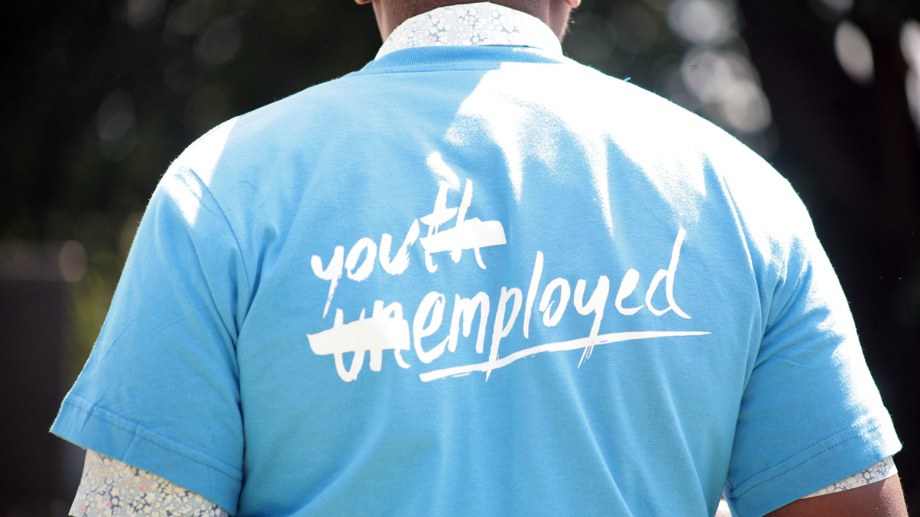
From CSR to Core Strategy: Aligning Corporate Values with Lasting Social Change

From Unemployment to $2 Billion in Wages: The ROI Case for Employment Programs That Work Discover how proven employment programs turn philanthropy into $2 billion in wages—and create lasting generational wealth worldwide.
Read it now
Has building a business case been a challenge for your corporate social responsibility efforts? Meanwhile, talent shortages bleed profits, and employee disengagement drains away more. Talent shortages impact companies $8.5 trillion globally. Employee disengagement takes another $7.8 trillion annually from the world economy.
What if your CSR investments could solve these core business problems while changing the lives of individuals and communities at risk?
This disconnect between social investment and business outcomes creates a costly paradox. Traditional corporate responsibility programs treat workforce development as charity, separate from operational challenges. This might generate short-term community engagement but not necessarily have lasting impact. Employment-first programs offer a different path—one that delivers measurable results and creates lasting impact where conventional CSR struggles.
Beyond Peripheral Programs: The Employment-First Advantage
Many corporate social responsibility programs struggle to create measurable business impact alongside their social goals. While these initiatives often generate community goodwill, they frequently operate separately from core business challenges. Meanwhile, skill gaps affect 87% of organizations globally.
This creates an opportunity for strategic funders. Employment-first programs bridge this gap by connecting social investment directly to business needs. Rather than funding training in isolation, these programs link skill development to verified employer demand. Corporate social responsibility goals are met because communities and individuals’ lives are changed through solving global workforce challenges.
Generation’s methodology illustrates this approach through seven integrated components:
- Jobs and employer engagement on ROI from the start
- Learners’ recruitment based on intrinsics, effort, and employment standards for the profession
- Profession-specific technical, behavioral, and mindset training while providing social supports
- Interviews with employer partners for rapid job placement
- Mentorship and an alumni community that follows graduates into the workplace
- Measurable return on investment for employers, graduates, and society
- Collect and analyze data at all stages with 57+ million data points
The results speak to outcomes-focused funders: when learners join Generation, 90% are unemployed, and nearly half are long-term unemployed. Three to six months after completing our program, 83% of graduates secure employment. Two to five years later, 76% remain employed. Graduates typically earn wages that equal the cost of the program within just 2-5 months of employment. Our 140,000+ graduates have collectively earned more than $2 billion in life-changing wages.
What Funders Actually Get: Durability Over Quick Wins
Traditional programs celebrate first-order outcomes because they’re easier to track. Volunteer participation, training completion, and charitable giving create impressive statistics for annual reports. Funders need metrics that justify long-term investment.
Generation tracks employment, financial, and well-being indicators for 2-5 years post-graduation. This extended measurement of Durability outcomes reveals true program impact. Graduates don’t just find jobs—they build careers that support families and strengthen communities.
While many programs celebrate training alone, Generation focuses on meaningful employment. Alumni consistently earn above living wages in growing sectors. Tech, healthcare, green jobs, and skilled trades offer career pathways that compound over time. And 58% of alumni are earning a living wage two to five years after graduation.
And contrary to conventional wisdom, Generation demonstrates that medium- and long-term outcomes measurement can be feasible and cost-effective. It costs 1% of the cost per learner to track Durability outcomes.
Related to this topic:
From Unemployment to $2 Billion in Wages: The ROI Case for Employment Programs That Work
The Partnership Advantage: Building Sustainable Talent Pipelines
Generation’s success stems from a collaborative approach that transforms traditional hiring practices. Rather than operating in isolation, we’ve built a global network of partnerships that creates sustainable talent pipelines while addressing real business challenges.
Multi-Stakeholder Collaboration at Scale
Our partnership ecosystem spans three categories: employer partnerships, funding collaborations, and training provider networks. We work with over 20,000 employers globally, ranging from multinational corporations to local businesses across healthcare, technology, financial services, and manufacturing sectors. These partnerships operate in 17 countries, adapting to local market needs while maintaining consistent quality standards.
Diverse Partnership Models
Our collaborations take multiple forms to meet varying organizational needs:
- Direct employer partnerships where companies participate in curriculum development and provide guaranteed interview opportunities for graduates
- Government-funded initiatives that leverage public investment to address workforce development priorities
- Multi-stakeholder collaborations involving foundations, training providers, and local organizations
Shared Investment in Outcomes
The partnership model creates shared value through various mechanisms. Some employers contribute to training costs while gaining access to skilled talent pipelines. Others provide in-kind support through educational content, tools, certifications, or subject matter experts who help co-create programs. Many engage their employees as mentors, creating ongoing relationships that extend beyond initial placement.
Proven Results
Our partnerships deliver measurable results. Across our employer network, 76% of graduates hired in the past year came through repeat employers—demonstrating sustained confidence in our approach. These employers report that Generation graduates earn income equivalent to our full cost per learner within just 2 to 5 months of employment, creating rapid return on investment.
The durability of these partnerships reflects their mutual benefit: employers gain access to diverse, job-ready talent that reflects their customer base, while graduates enter careers with built-in support systems and clear advancement pathways.
From Good Intentions to Strategic Impact
The choice between traditional CSR and employment-first programs isn’t just about social responsibility—it’s about strategic effectiveness. While CSR initiatives often generate goodwill without addressing core business challenges, employment-first programs create measurable value for both society and employers.
Companies that hire Generation graduates don’t just fulfill social missions—they solve real talent acquisition problems. With 76% of our recent graduates hired by repeat employers, these companies have discovered what traditional CSR approaches miss: sustainable social impact requires sustainable business value.
Employment programs deliver what CSR promises but rarely achieves—lasting change. Our graduates maintain 76% employment rates two to five years post-graduation, with 58% earning above living wages. This durability extends beyond individual careers to entire families and communities, creating the generational change that one-time CSR initiatives can’t match.
For companies facing persistent talent shortages, the path forward is clear. Employment-first partnerships provide access to diverse, job-ready talent while creating measurable social impact. The competitive advantage belongs to organizations that recognize workforce development as core strategy, not charitable afterthought.
The talent crisis demands solutions that work for business and society alike. Employment programs prove that the most effective social responsibility strategies are those that solve real business problems. Ready to transform your corporate social responsibility impact? Connect with Generation to explore sector-specific partnerships that deliver both social mobility and business returns. Our team will design a pilot program matching your investment capacity with proven employment outcomes.